


Archival preservation is about more than just storage. Without structured organization or critical review, documents pile up, become difficult to use, and make any exhaustive digitization effort less relevant.
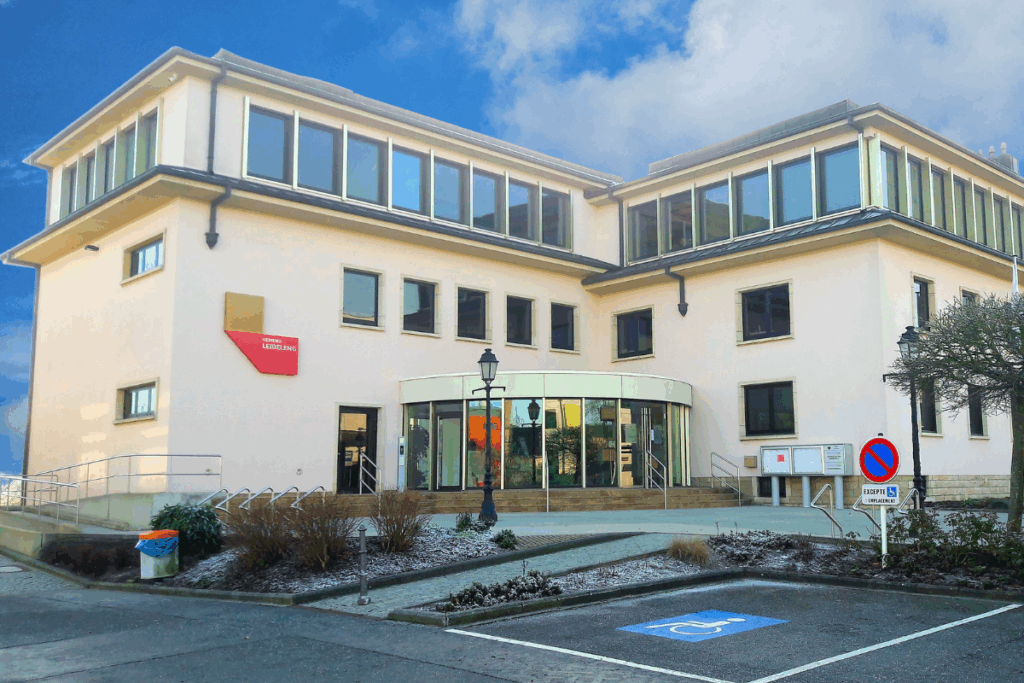
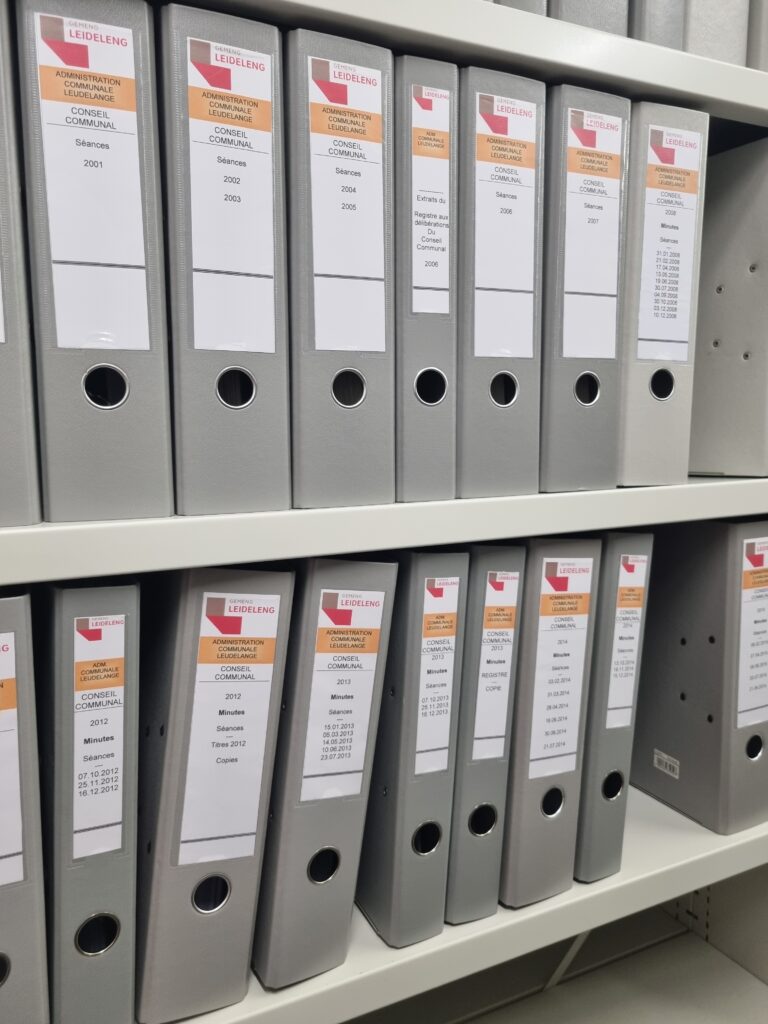
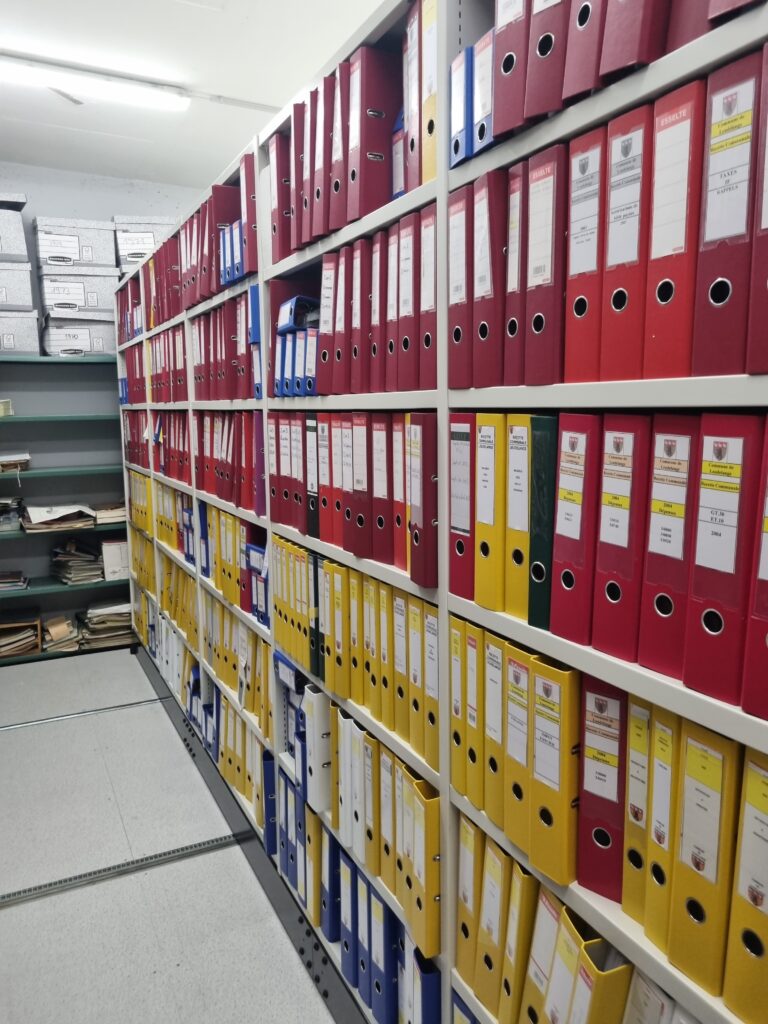
Aware of the richness of its documentary heritage, the municipal administration of Leudelange launched a large-scale project to review and structure all its archives, some of which date back to the mid‑19th century.
To successfully carry out this mission, CK, in collaboration with a partner specialized in archival science, mobilized a team of three archivists for three weeks.
The objective of this project was to analyze, restructure, and inventory more than 400 linear meters of documents stored in the municipal premises.
Structuring for better use: developing a classification plan
An initial system already existed, but it did not fully reflect the diversity and evolution of the municipality’s missions.
The archivists therefore began with a comprehensive analysis of the collection to identify all the topics covered and organize them coherently :
- Population and civil registry
- Municipal finances
- Human resources
- Building permits
- Community life and events
- Municipal heritage
This work led to the creation of an evolving classification plan, able to adapt to future changes in municipal responsibilities. Because a local authority evolves: some functions disappear, others emerge. The classification must follow this dynamic.
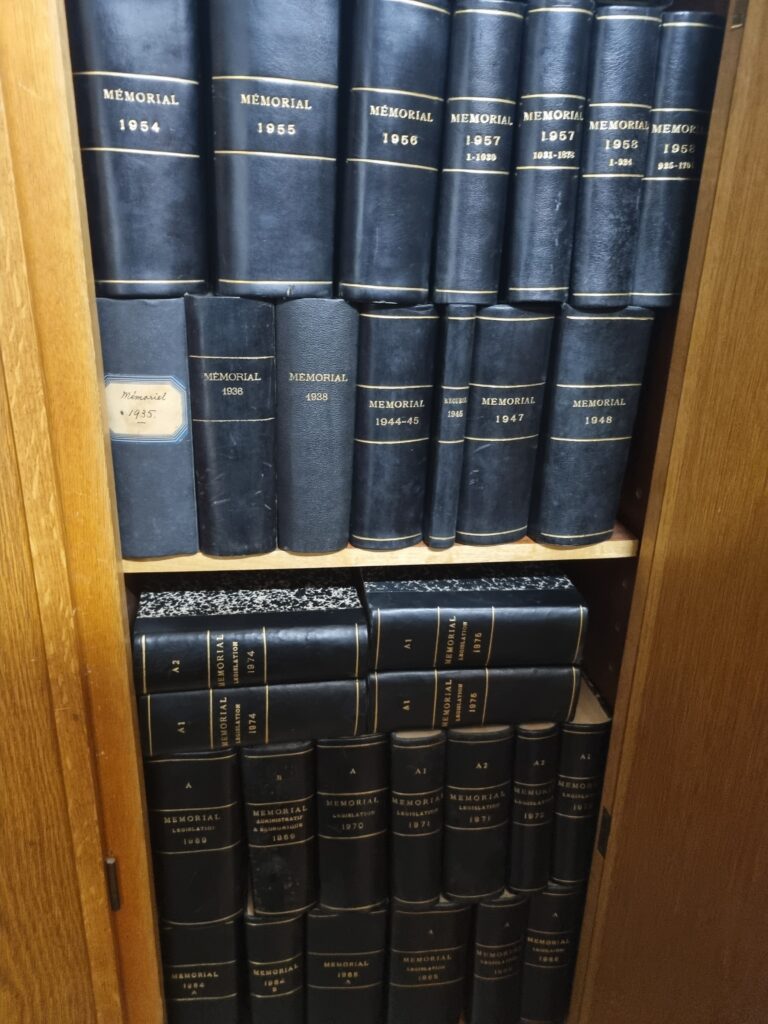
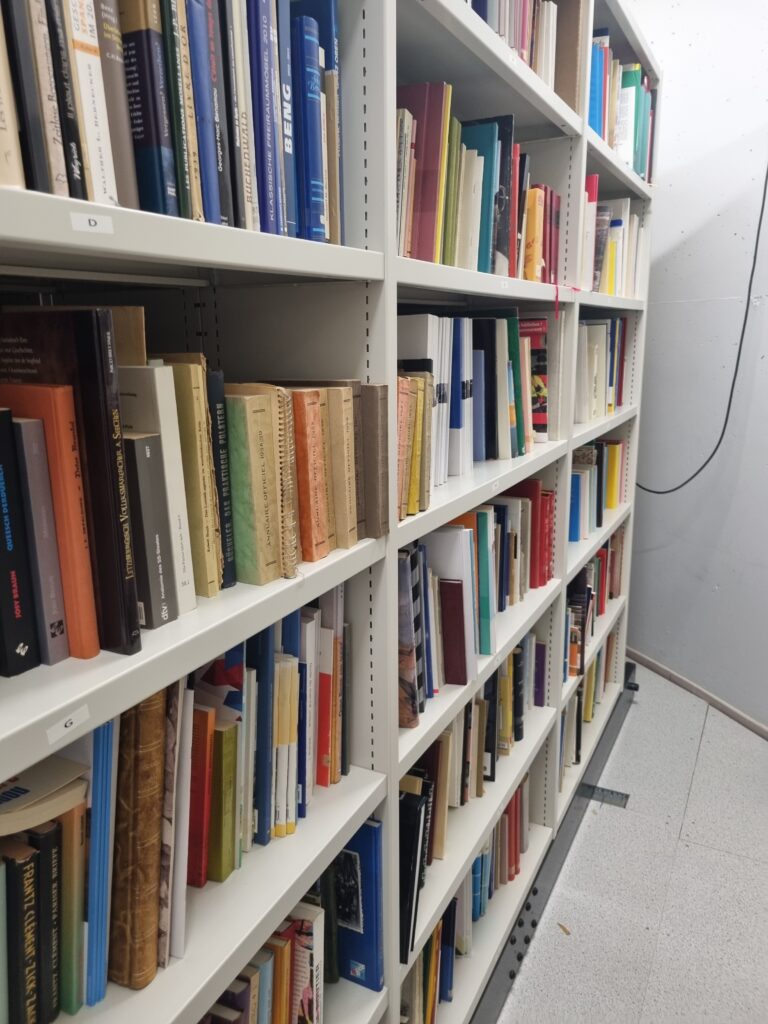
Physical reorganization: coherence restored and space optimized
Over the years, archives had been moved around based on space constraints or departmental needs. Some document groups had become fragmented.
The physical reorganization, aligned with the new classification plan, made it possible:
- to reassemble dispersed files,
- to make the archives clearer and more accessible for municipal staff,
- to optimize storage space.
Result: a collection that is now coherent, structured, and immediately usable.
Inventorying: a comprehensive view of the documentary heritage
A key step in the project, the inventorying process consisted of listing all the archival units (boxes, binders, folders, etc.).
This strategic tool now allows the municipal administration:
- to identify duplicates and gaps,
- to locate documents eligible for disposal,
- to highlight items of significant heritage or legal value.
The municipal administration of Leudelange now has a complete and reliable map of its documentary heritage.
Digitization that is now relevant and targeted
The initial goal of the project was clear: to prepare an efficient digitization campaign.
Thanks to the classification and inventorying work, the municipal administration can now:
- select documents with high heritage value,
- identify frequently consulted files,
- prioritize sensitive or fragile archives.
Digitization will no longer be massive and indiscriminate, but strategic and high in added value.
An exceptional heritage brought back to light
The project also led to the rediscovery of remarkable items, including the oldest deliberation register covering the period 1856 – January 1882.
« The municipal administration of Leudelange is very fortunate to have preserved almost all of its archives. Population movements, organization of festive events, construction of emblematic buildings… the entire history of the 20th century is documented here. This project also allowed us to bring back to light the oldest deliberation register. We left proud of the work accomplished and the discoveries made.. »
Laëtitia Brasseur, archivist
A structuring project for the future
Thanks to this mission carried out by CK and its partner, the municipality of Leudelange now has:
- a modern and adaptable classification plan,
- a comprehensive inventory,
- physically reorganized archives,
- a solid foundation to confidently begin the next steps: regulatory disposals, detailed classification, and large-scale digitization.
More than just tidying up, this project represents a true lever for administrative modernization and heritage enhancement.